
When performing dynamic balancing on a water pump, the entire rotor component should be done together. If the impeller is replaced and the balance point changes, it needs to be re aligned. If it is a regular single-stage pump, it is not necessary because the residual unbalance has little impact on the pump. If it is a high-speed pump or a multi-stage pump, it needs to be re balanced. I am not familiar with high-speed pumps, so I estimate that it should also be done. For multi-stage pumps, the rotor components need to be assembled in small pieces, and after dynamic balancing, the positions of each component should be marked before assembling the entire pump as a whole, in order to achieve the effect of dynamic balancing.

The dynamic balance of the impeller can be achieved through a dynamic balancing machine. The general method is to use the weight removal method, which involves placing the required water pump impeller on the balancing machine and rotating it at high speed. The dynamic balancing machine calculates the unbalance amount (including the position of the unbalance) based on the centrifugal force of the unbalance, and displays it on the screen of the balancing machine. Then, the excess weight is removed. After several repetitions, the smaller the error, the better, in order to achieve the balance standard of the water pump impeller.
The conditions for dynamic balance of the water pump rotor: High speed pumps need to undergo dynamic balance testing, while low speed pumps generally only need to undergo static balance.
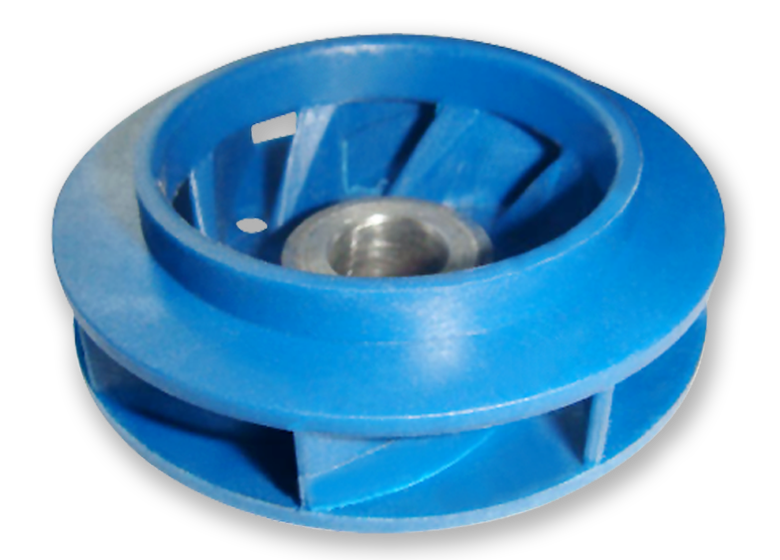
1) For the rotors of single-stage and two-stage pumps, when the working speed is less than 1800 rpm, only static balance can be performed regardless of D/b<6 or D/b ≥ 6. However, if dynamic balancing is required, it is necessary to ensure that D/b<6, otherwise only static balancing can be performed.
2) For the rotors of single-stage and two-stage pumps, if the operating speed is ≥ 1800 rpm, only static balance can be performed if D/b is ≥ 6. But the remaining unbalance after balancing should be equal to or less than half of the allowable unbalance. If dynamic balancing is required, it is necessary to check whether the two front end balances can be separated on the balancing machine. If they cannot be separated, only static balancing can be performed.
3) For some open impellers and other rotors, if it is not possible to achieve support at both ends, only static balance can be performed. Because the two ends cannot be supported, it is necessary to perform cantilever, which is very dangerous to perform dynamic balancing on the balancing machine. Only single-sided (static) balancing can be performed on the balancing frame.
If a rigid rotor cannot meet the conditions of a disc-shaped rotor for static balance, two planes need to be balanced, that is, dynamic balance. The rotor conditions for static balance only are as follows (the highest accuracy is achieved with a balance static degree of G0.4, and in general, the dynamic balance static degree of the pump impeller is selected as G6.3 or G2.5):
1. For multi-stage pumps and combined rotors (3 stages or above), regardless of the operating speed, dynamic balancing of the combined rotor should be performed.
2. A typical single-stage centrifugal pump does not need to be used.
3. A large single-stage pump (3000m3 circulating water pump) needs to be installed.
4. It's best to make a multi-stage pump.
5. It's best to do a high-speed pump.
6. The impeller of a regular pump manufacturer has undergone static balancing before leaving the factory.
Usually, a single-stage pump does not need to undergo a dynamic balance test again after replacing the impeller, but it should be ensured that the replaced impeller parts have undergone a dynamic balance test (if the user cuts the impeller diameter again after the dynamic balance test, a new dynamic balance test needs to be conducted). For a multi-stage centrifugal pump, if the impeller is replaced, even if the impeller has undergone a dynamic balance test, the impeller should be installed on the pump shaft and the entire rotor should undergo a dynamic balance test again. The position of each part should be remembered, and then the pump should be reinstalled according to the position of the dynamic balance test impeller. Please contact our factory technician or customer service for the specific type of dynamic balancing machine you need.
The dynamic balance of the impeller can be achieved through a dynamic balancing machine. The general method is to use the weight removal method, which involves placing the required water pump impeller on the balancing machine and rotating it at high speed. The dynamic balancing machine calculates the unbalance amount (including the position of the unbalance) based on the centrifugal force of the unbalance, and displays it on the screen of the balancing machine. Then, the excess weight is removed. After several repetitions, the smaller the error, the better, in order to achieve the balance standard of the water pump impeller.
The conditions for dynamic balance of the water pump rotor: High speed pumps need to undergo dynamic balance testing, while low speed pumps generally only need to undergo static balance.
1) For the rotors of single-stage and two-stage pumps, when the working speed is less than 1800 rpm, only static balance can be performed regardless of D/b<6 or D/b ≥ 6. However, if dynamic balancing is required, it is necessary to ensure that D/b<6, otherwise only static balancing can be performed.
2) For the rotors of single-stage and two-stage pumps, if the operating speed is ≥ 1800 rpm, only static balance can be performed if D/b is ≥ 6. But the remaining unbalance after balancing should be equal to or less than half of the allowable unbalance. If dynamic balancing is required, it is necessary to check whether the two front end balances can be separated on the balancing machine. If they cannot be separated, only static balancing can be performed.
3) For some open impellers and other rotors, if it is not possible to achieve support at both ends, only static balance can be performed. Because the two ends cannot be supported, it is necessary to perform cantilever, which is very dangerous to perform dynamic balancing on the balancing machine. Only single-sided (static) balancing can be performed on the balancing frame.
If a rigid rotor cannot meet the conditions of a disc-shaped rotor for static balance, two planes need to be balanced, that is, dynamic balance. The rotor conditions for static balance only are as follows (the highest accuracy is achieved with a balance static degree of G0.4, and in general, the dynamic balance static degree of the pump impeller is selected as G6.3 or G2.5):
1. For multi-stage pumps and combined rotors (3 stages or above), regardless of the operating speed, dynamic balancing of the combined rotor should be performed.
2. A typical single-stage centrifugal pump does not need to be used.
3. A large single-stage pump (3000m3 circulating water pump) needs to be installed.
4. It's best to make a multi-stage pump.
5. It's best to do a high-speed pump.
6. The impeller of a regular pump manufacturer has undergone static balancing before leaving the factory.
Usually, a single-stage pump does not need to undergo a dynamic balance test again after replacing the impeller, but it should be ensured that the replaced impeller parts have undergone a dynamic balance test (if the user cuts the impeller diameter again after the dynamic balance test, a new dynamic balance test needs to be conducted). For a multi-stage centrifugal pump, if the impeller is replaced, even if the impeller has undergone a dynamic balance test, the impeller should be installed on the pump shaft and the entire rotor should undergo a dynamic balance test again. The position of each part should be remembered, and then the pump should be reinstalled according to the position of the dynamic balance test impeller. Please contact our factory technician or customer service for the specific type of dynamic balancing machine you need.
47 Views


