
What are the factors that need to be considered when designing the drive system of a balancing machine? The technical master of Shenman Dynamic Balance Machine Factory mainly analyzes the following aspects of the drive system: design considerations for the balance machine drive system, types of drive systems, selection of drive motor types and power, and installation of the drive system.
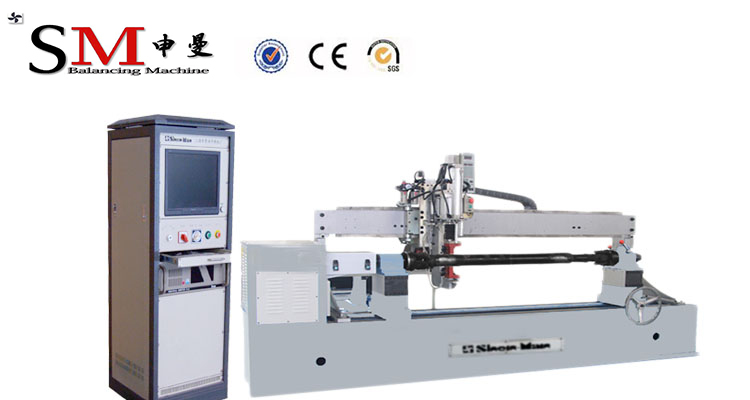
The drive system is one of the three major systems of a balancing machine (i.e. drive, display measurement, and support), and its performance has a significant impact on the overall performance of the balancing machine. The balancing machine drive system not only enables the balancing machine to work at the rated operating speed under full load, but also requires economy, reliability, and easy control. In addition, in high-precision balancing machines, smooth driving is also required. In some constant speed balancing machines, good stability of speed is required.
When designing (or selecting) the drive system of a balancing machine, the following points should be considered in the design of the drive system:
1、 The motor driving power should ensure that the balancing machine has sufficient starting torque and should have the ability to operate at the required balancing speed under maximum load (full load state).
2、 The stability of the drive should ensure the smooth rotation of the balancing machine, that is, the impact of instability caused by the drive on the unbalanced signal should be limited to a minimum.
3、 In order to improve the balance efficiency of the balancing machine, the acceleration and deceleration time of the rotor should be minimized as much as possible. In this way, the booster or reducer should be set according to the situation within the speed range.
4、 The speed range drive system should be able to meet the requirements of the speed range of the balancing machine, especially to reach the maximum speed of the balancing machine.
5、 The nature of machine operation should mainly consider the following two aspects:
1. Do machines only need to operate at one to several rated speeds, or do they require continuous speed regulation
2. Balance the properties of the workpiece (rotor), whether it is a flexible rotor or a rigid rotor. Usually, when performing dynamic balancing on flexible rotors, high requirements are placed on the adjustability and adjustability of machine speed; For rigid rotors, their requirements can be correspondingly reduced.
6、 If it is technically feasible to use two (or more) driving systems for machine operation, then further consideration should be given to the specific operating characteristics of the balancing machine, such as the convenience of loading and unloading the rotor, before deciding on the choice of driving method.
7、 Every driving method of economy cannot be perfect, there are always its own shortcomings. Usually, the more functions a system has and the more expensive its value is. Therefore, economic compromise should be considered and its gains and losses should be comprehensively measured.
The drive system is one of the three major systems of a balancing machine (i.e. drive, display measurement, and support), and its performance has a significant impact on the overall performance of the balancing machine. The balancing machine drive system not only enables the balancing machine to work at the rated operating speed under full load, but also requires economy, reliability, and easy control. In addition, in high-precision balancing machines, smooth driving is also required. In some constant speed balancing machines, good stability of speed is required.
When designing (or selecting) the drive system of a balancing machine, the following points should be considered in the design of the drive system:
1、 The motor driving power should ensure that the balancing machine has sufficient starting torque and should have the ability to operate at the required balancing speed under maximum load (full load state).
2、 The stability of the drive should ensure the smooth rotation of the balancing machine, that is, the impact of instability caused by the drive on the unbalanced signal should be limited to a minimum.
3、 In order to improve the balance efficiency of the balancing machine, the acceleration and deceleration time of the rotor should be minimized as much as possible. In this way, the booster or reducer should be set according to the situation within the speed range.
4、 The speed range drive system should be able to meet the requirements of the speed range of the balancing machine, especially to reach the maximum speed of the balancing machine.
5、 The nature of machine operation should mainly consider the following two aspects:
1. Do machines only need to operate at one to several rated speeds, or do they require continuous speed regulation
2. Balance the properties of the workpiece (rotor), whether it is a flexible rotor or a rigid rotor. Usually, when performing dynamic balancing on flexible rotors, high requirements are placed on the adjustability and adjustability of machine speed; For rigid rotors, their requirements can be correspondingly reduced.
6、 If it is technically feasible to use two (or more) driving systems for machine operation, then further consideration should be given to the specific operating characteristics of the balancing machine, such as the convenience of loading and unloading the rotor, before deciding on the choice of driving method.
7、 Every driving method of economy cannot be perfect, there are always its own shortcomings. Usually, the more functions a system has and the more expensive its value is. Therefore, economic compromise should be considered and its gains and losses should be comprehensively measured.
37 Views


