
1. Selection of Correction Surface
The operation of eliminating the rotor imbalance so that it is in balance is called balance correction. Balance correction is carried out on a plane perpendicular to the rotor axis, which is called the correction plane. One-sided balancing or static balancing is required to correct the balance only in one correcting plane, and two or more correcting planes are called double-sided or multi-sided balancing or dynamic balancing. For the rotor with large initial imbalance and excessive vibration when rotating, one-sided balancing should be carried out before checking dynamic balance to eliminate static imbalance. Sometimes, due to improper selection of correcting surface position (i.e. the center of gravity is not in the correcting surface selected), even imbalance will increase after correcting static balance. Therefore, the correcting surface is chosen in the plane of the center of gravity to reduce even imbalance. If the plane of the center of gravity does not permit weight removal, it should generally be carried out on two planes on both sides of the plane of the center of gravity. For rigid rotors, there are usually static and even imbalances. To achieve balance, the imbalance can be corrected in two correcting planes that are arbitrarily selected perpendicular to the axis, i.e. the so-called double-sided balance. Correction methods are generally weighted (e.g. with a balance weight) or de-weighted (e.g. perforated). The position of the correcting plane is generally determined by the structure of the rotor. In order to reduce the time and labor involved in the balancing operation, efforts should be made to reduce the amount of correction. Therefore, whenever possible, the distance and radius of the two correction surfaces should be increased to achieve a good balancing effect.
2. Checking method
The rotor imbalance is caused by the misalignment of the central main inertia axis and the rotating axis. The balance correction is to change the mass distribution of the rotor so that the central main inertia axis and the rotating axis coincide to achieve balance. Commonly used correction methods include adjusting the correction weight, weighting or weight removal, etc.
The weighting can be connected by screw, riveted and welded. This method can achieve better balance effect and higher balance precision for the rotor, and is convenient and safe. Drilling, grinding, mashing and milling are used for weight removal. Grind the rotor parts and impellers of the pump to remove the weight or balance the weight on the coupling. The choice of the correction method depends on the rotor structure and process requirements as well as the geometry of the correction surface. Generally, the position of weighting or weight removal should be considered in the design of rotors.
3. Correction error
In the balancing process, besides the measuring error of the balancing machine, there are also errors due to the inaccuracy of the balancing correction (including the size and position of the correction quantity), which is called the correction error. It can be divided into angle error correction, amplitude error correction, radius error correction and plane position error correction. In actual correction, most of the above four errors occur synthetically, and should be considered comprehensively in analysis. In addition, the ratio between initial unbalance and residual unbalance and the effect of unbalance reduction rate of dynamic balancer should also be considered.
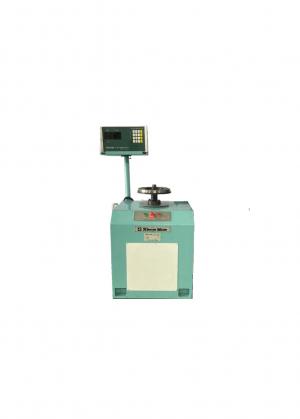
Established in 2002, Shanghai Shenman Electrical and Mechanical Equipment Co., Ltd. is a famous dynamic balancing machine manufacturing enterprise and balance testing equipment supplier in China. Its main business is self-driven balancing machine, automatic positioning balancing machine, vertical balancing machine, on-site balancer, balancing machine, ring balancing machine, dynamic balancing machine, automatic balancing machine, drive shaft balancing machine, cardan joint balancing machine, etc. It is one of the earlier private enterprises in China that has the capacity to produce 40 ton dynamic balancing machine, and at the same time, it is one of the enterprises that keep the private dynamic balancing machine breaking the production record of 70 ton dynamic balancing machine. For more information and prices on the balancing machine, please contact us!


